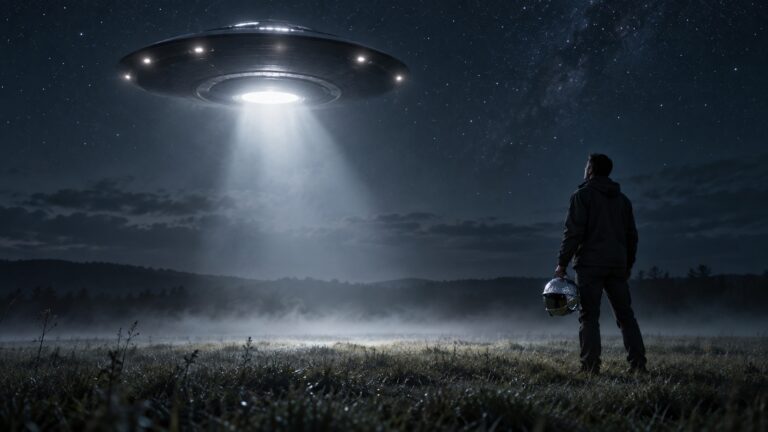
In a significant development for those intrigued by Unidentified Anomalous Phenomena (UAP), NASA has decided to take a more active role in understanding these mysterious occurrences. In response to recommendations from an independent study team, the space agency recently announced the appointment of a Director of UAP Research.
The full report from the independent study team, which includes NASA’s endorsement of this new role, is available on NASA’s official website here.
The purpose behind this move is NASA’s desire to contribute to the ongoing government efforts aimed at better understanding events in the sky that defy conventional explanation – events that cannot be identified as conventional aircraft, balloons, or known natural phenomena when viewed from a scientific perspective.
NASA Administrator Bill Nelson expressed gratitude to the Independent Study Team for their insights on how NASA can improve its study and analysis of UAP. Nelson stated, “NASA’s new Director of UAP Research will develop and oversee the implementation of NASA’s scientific vision for UAP research, including using NASA’s expertise to work with other agencies to analyze UAP and applying artificial intelligence and machine learning to search the skies for anomalies. NASA will do this work transparently for the benefit of humanity.”
The report produced by the independent study team contains their findings and recommendations, which aim to guide NASA in collecting relevant data and shedding light on the origin and nature of future UAP. Importantly, the report is not a review or assessment of previous UAP incidents.
While NASA is still in the process of evaluating the report and its recommendations, the agency is committed to playing a significant role in the federal government’s efforts to understand UAP by appointing a Director of UAP Research.
Previously, a NASA liaison to the Department of Defense covered limited UAP activities for the agency. The new director role will centralize communications, resources, and data analytical capabilities, establishing a robust database for evaluating future UAP. This individual will also leverage NASA’s expertise in artificial intelligence, machine learning, and space-based observation tools to support and enhance the broader government initiative on UAP.
The overall recommendation from the independent study team is that NASA can make a prominent contribution to the government’s effort to understand UAP by advancing the study and data collection of these phenomena. The team suggests that NASA utilize its open-source resources, technological expertise, data analysis techniques, federal and commercial partnerships, and Earth-observing assets to curate a more comprehensive dataset for understanding future UAP.
NASA also intends to encourage citizen reporting by engaging with the public and commercial pilots to build a broader and more reliable UAP dataset. This approach aims to identify future UAP incidents while also reducing the stigma associated with studying such phenomena.
Nicola Fox, Associate Administrator of the Science Mission Directorate at NASA Headquarters in Washington, emphasized the importance of data in advancing scientific exploration and expressed gratitude to the independent study team for their expertise in identifying available data for understanding the nature and origin of future UAP.
The independent study team, operating independently of NASA, used unclassified data from civilian government entities, commercial data, and other sources to inform their findings and recommendations. Currently, there are only a limited number of high-quality observations of UAP, making it challenging to draw firm scientific conclusions about their nature.
David Spergel, President of the Simons Foundation and Chair of the UAP independent study team, highlighted the importance of using unclassified data for their fact-finding efforts. He stressed the team’s commitment to transparency, open communication, and scientific rigor in producing the report. Spergel noted that NASA can assist the broader government effort in understanding UAP by ensuring systematic data calibration, multiple measurements, and thorough sensor metadata to create a reliable and extensive dataset for future study.
The UAP independent study team consists of 16 community experts with diverse expertise relevant to the study of unidentified anomalous phenomena. NASA commissioned this study to examine UAP from a scientific perspective and create a roadmap for using data and scientific tools to advance our understanding of these phenomena.
About the Author