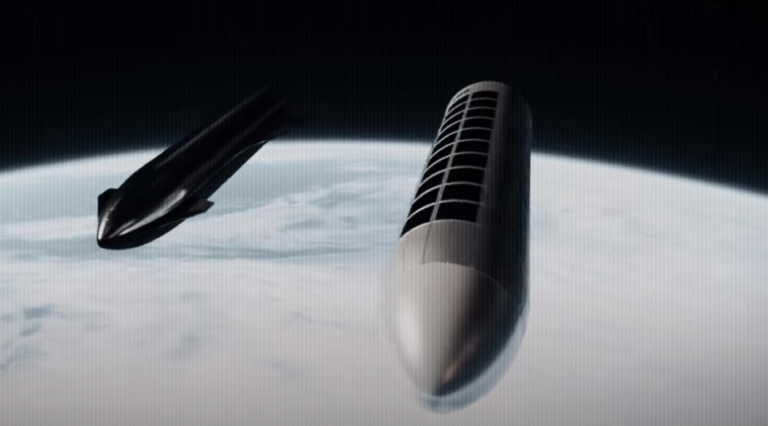
The Moon is about to gain a fresh crater.
On Wednesday, August 5, 2026, a discarded upper stage from a SpaceX Falcon 9 rocket is expected to strike the lunar surface at roughly 5,400 mph, or 2.43 kilometers per second. Current tracking places the collision at approximately 06:35 UTC, near Einstein crater along the Moon’s illuminated limb.
But this is not a SpaceX lunar landing.
There is no spacecraft attempting a controlled touchdown. No engines will fire at the last moment. Instead, a dead piece of rocket hardware that has been wandering through cislunar space for more than a year will end its journey in a violent, uncontrolled impact.
For astronomers, that accidental crash presents an unusually valuable experiment.
The Rocket Stage Has Been Drifting Since January 2025
The object is officially cataloged as 2025-010D.
It was the Falcon 9 upper stage used during the January 15, 2025, launch of two commercial lunar landers: Firefly Aerospace’s Blue Ghost Mission 1 and ispace’s Hakuto-R Mission 2 lander, RESILIENCE. The reusable Falcon 9 first stage returned safely, but the upper stage remained in space after completing its job.
Blue Ghost successfully reached the lunar surface in March 2025. RESILIENCE attempted to land several months later but lost contact during its descent and crashed.
Meanwhile, the abandoned upper stage continued circling through the Earth-Moon system.
Astronomers and asteroid surveys collected more than 1,000 observations of the object. Orbital calculations first indicated in September 2025 that it would eventually meet the Moon on August 5, 2026.
Sunlight made the prediction harder than it might sound.
Although gravity controls most of the stage’s motion, solar radiation also exerts a tiny force on its large, tumbling body. That pressure builds over time and makes the final impact point harder to calculate perfectly. The latest estimate places the collision at 06:35:37 UTC, give or take several seconds, although the final location may shift by several kilometers.
What Time Will the SpaceX Rocket Hit the Moon?
The predicted impact time is approximately:
- 2:35 a.m. EDT on August 5
- 1:35 a.m. CDT
- 12:35 a.m. MDT
- 11:35 p.m. PDT on August 4
The timing favors parts of eastern North America and South America, where the Moon will be above the horizon under nighttime skies.
Those regions may have the best viewing geometry.
That does not mean casual observers will see an obvious explosion.
The Impact Will Release the Energy of Roughly Three Tons of TNT
The upper stage weighs approximately four to five metric tons. At impact, it will be moving at around 2.43 kilometers per second.
That produces roughly 14.5 billion joules of kinetic energy—the equivalent of about three tons of TNT.
The collision will destroy the stage almost instantly.
Models suggest it could excavate a crater roughly 20 to 30 meters wide, although estimates vary because the precise impact angle and surface material remain uncertain. A collision with loose lunar regolith would produce a different result from a direct strike on denser rock.
Scientists will not simply be waiting to see a new hole in the ground.
They are especially interested in the material blasted above the surface.
A Tower of Lunar Dust Could Rise Above the Horizon
The impact should throw lunar soil and rock outward in a fast-moving curtain.
One recent simulation predicts that the main ejecta curtain could reach approximately 15 to 20 kilometers above the surface, while a narrower central spike might climb 75 to 100 kilometers. The plume could also spread more than 180 kilometers sideways from the impact point.
That plume may be easier to detect than the original impact flash.
The collision will happen on sunlit terrain. Any flash lasting less than a second must compete with the bright lunar surface behind it. Researchers disagree about how visible it will be, and some calculations suggest it could be extremely faint.
The ejecta has one important advantage.
Because the impact point lies close to the lunar limb, some of the dust could rise beyond the visible edge of the Moon and appear against the dark sky. Sensitive telescopes and high-speed cameras may therefore capture material climbing above the horizon even if they miss the initial flash.
Researchers recommend recording for several minutes after the predicted impact rather than stopping after the first second.
Can You Watch the Moon Crash From Earth?
Not with the naked eye.
Binoculars are also unlikely to reveal anything.
Even experienced observers using telescopes will face a difficult target. They must aim at the correct point along the lunar limb, begin recording before the predicted time, and use a camera capable of capturing a brief and potentially faint event.
Good atmospheric conditions will also matter.
Professional observatories and well-equipped amateur astronomers are being encouraged to attempt observations. The event offers a rare opportunity to record a human-made lunar impact in real time with the object’s trajectory, mass, speed, and arrival time already reasonably well known.
Anyone without advanced equipment will probably get a better view from observatory footage released afterward.
NASA and South Korea Will Inspect the New Crater
Even if Earth-based telescopes miss the collision, spacecraft orbiting the Moon should help reveal what happened.
NASA’s Lunar Reconnaissance Orbiter and South Korea’s Danuri orbiter are expected to collect before-and-after images of the region. Those images should allow researchers to locate the fresh crater and compare its actual shape with impact-model predictions.
Danuri is also predicted to pass within only a few kilometers of the Falcon 9 stage around two minutes before impact.
The rocket is not expected to strike the orbiter, but the close passage highlights how complicated traffic can become around the Moon as more countries and private companies send hardware into cislunar space.
Why Scientists Are Excited About an Accidental Crash
The Moon is hit by natural meteoroids constantly.
The problem is that astronomers rarely know exactly when those objects will arrive, how massive they are, or how fast they were traveling.
This Falcon 9 stage is different.
Its dimensions are known. Its approximate mass is known. Its path has been tracked for months. Its impact speed and arrival time can be calculated with unusual precision.
That makes the crash a useful calibration event.
Researchers can compare the observed flash, ejecta movement, and eventual crater with their models. The results may improve understanding of lunar soil, impact physics, dust behavior, crater formation, and the danger that future artificial impacts could pose to equipment or astronauts.
Controlled impacts have produced useful science before.
During the Apollo era, NASA deliberately sent spent rocket stages and lunar modules into the Moon so seismometers could record the resulting vibrations. In 2009, the LCROSS mission intentionally struck a permanently shadowed region while searching for evidence of water ice.
The August 5 collision was not planned, but scientists can still extract valuable information from it.
The Bigger Warning Is About Lunar Space Junk
This single impact poses no meaningful danger to people.
There are no astronauts near the predicted crash site, and the odds of debris damaging an existing spacecraft are extremely small. Natural impacts remain a much greater lunar hazard.
The long-term issue is different.
As lunar launches become more common, abandoned rocket stages cannot simply be left in unstable Earth-Moon orbits without considering where they will eventually go.
Future missions could direct spent stages into safer heliocentric orbits, arrange controlled disposal paths, or ensure that operators maintain responsibility for their hardware after launch.
Those procedures will become far more important once the Moon contains permanent scientific stations, communications systems, surface vehicles, and human habitats.
For now, the abandoned Falcon 9 stage offers a dramatic preview of that future.
At approximately 06:35 UTC on August 5, a five-story piece of space hardware will meet the Moon at thousands of miles per hour.
The flash may last less than a heartbeat.
The crater could remain for millions of years.
About the Author