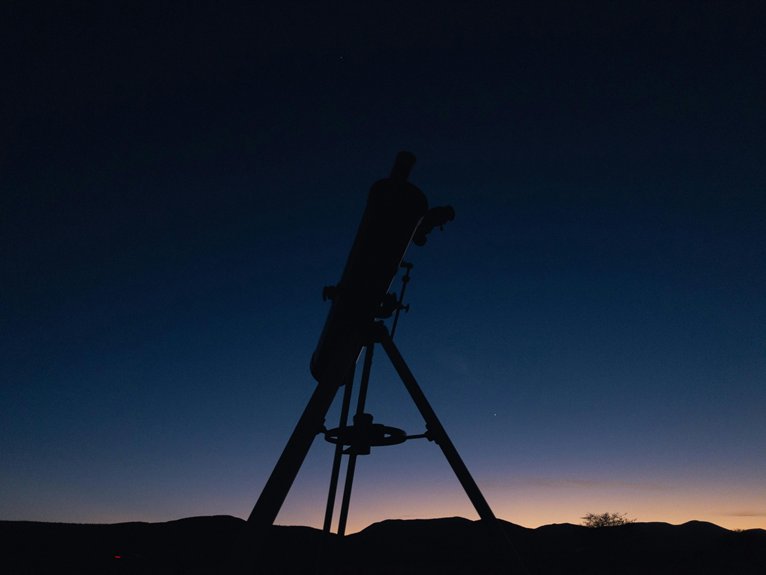
Did you know that nearly 70% of people in urban areas have never seen the Milky Way due to light pollution? If you’re among those enthusiastic to explore the night sky, finding the right telescope can transform your stargazing experience. With various types and features available, it’s essential to understand your preferences and how they align with telescope specifications. So, what should you consider to access your perfect view of the cosmos?
Understanding Types of Telescopes: Refractors vs. Reflectors vs. Compound
When you plunge into the world of telescopes, understanding the different types can feel overwhelming, but it doesn’t have to be. You’ve got three main types to evaluate: refractors, reflectors, and compound telescopes.
Refractors use lenses to bend light, offering crisp images, perfect for planetary viewing. Reflectors, on the other hand, utilize mirrors to gather light, making them great for deep-sky objects. They often provide larger apertures for less cost.
Finally, compound telescopes combine both lenses and mirrors, giving you versatility and compactness, ideal for varied stargazing. Each type has its strengths, so think about what you want to observe most.
With the right choice, you’ll reveal the secrets of the universe, one star at a time.
Key Specifications to Consider: Aperture, Focal Length, and Magnification
Choosing the right telescope goes beyond just understanding the types available; it’s also about grasping key specifications that impact your viewing experience.
Three essential specs to take into account are:
- Aperture: This is the diameter of the main lens or mirror. A larger aperture gathers more light, providing clearer and brighter images of celestial objects.
- Focal Length: This determines how much detail you can see and the field of view. A longer focal length is great for detailed observations of planets and stars.
- Magnification: While it sounds impressive, don’t be misled. Higher magnification can lead to shaky images unless you have a stable mount, so balance is key.
Understanding these specifications will empower you to choose a telescope that truly enhances your stargazing adventures.
Portability and Setup: Choosing the Right Telescope for Your Lifestyle
Finding the perfect telescope for your stargazing adventures often hinges on its portability and ease of setup.
If you’re planning to explore different locations, you’ll want a lightweight model that’s easy to transport. Consider collapsible designs or tabletop telescopes that fit in your car without hassle.
When it comes to setup, look for telescopes that require minimal assembly—some can be ready in just minutes. A user-friendly mount can make a world of difference, especially if you’re enthusiastic to start stargazing right away.
Remember, the best telescope complements your lifestyle, so choose one that matches your level of commitment and convenience.
With the right device, you’ll be ready to access the mysteries of the universe without missing a beat.
Accessories and Add-Ons: Enhancing Your Stargazing Experience
Once you’ve settled on the perfect telescope that fits your lifestyle, it’s time to think about accessories and add-ons that can elevate your stargazing experience.
These tools can enhance both your viewing and your enjoyment of the cosmos. Here are three must-have accessories:
- Filters: Enhance your view of celestial objects by reducing glare and increasing contrast.
- Smartphone Adapters: Capture stunning images of the night sky directly through your telescope, sharing your discoveries with friends.
- Star Charts or Apps: Navigate the sky with ease and identify constellations and planets, making your stargazing sessions more rewarding.
With the right accessories, you’ll reveal new dimensions of the universe, transforming your nights into unforgettable cosmic adventures.
Budget Considerations: Finding Quality Telescopes at Every Price Point
When you’re on a quest for the right telescope, it’s essential to contemplate your budget, as quality options are available across a wide range of price points.
If you’re just starting out, you can find solid beginner telescopes for as little as $100, ideal for casual stargazing. As you gain experience, consider investing between $300 to $600 to reveal better optics and more advanced features.
For serious enthusiasts, high-end models exceeding $1,000 deliver stunning clarity and precision. Remember, you don’t have to break the bank to enjoy the cosmos.
Research options, read reviews, and visit local astronomy clubs to test equipment before purchasing. With the right telescope, you’ll uncover the universe’s wonders without compromising your wallet.
About the Author