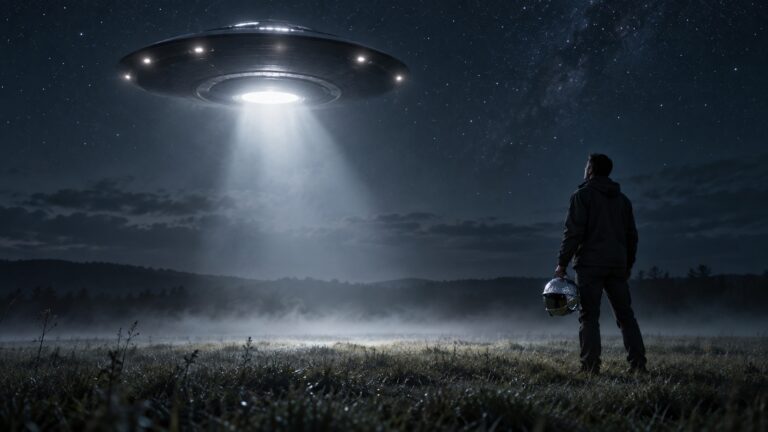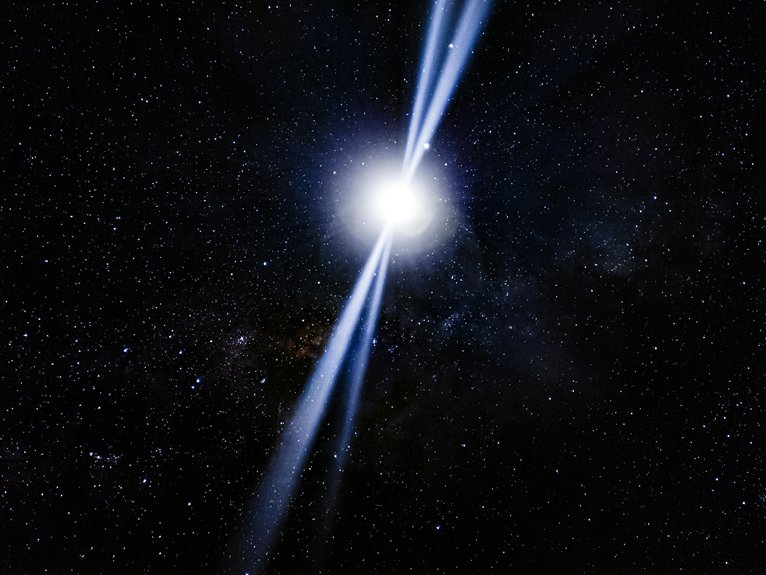
Did you know that Donald Howard Menzel, a Harvard astronomer, not only advanced our understanding of quasars but also became a fierce critic of UFO sightings? His skepticism stirred quite the controversy, leading many to question the very nature of extraterrestrial encounters. What drove Menzel to dismiss these phenomena so vehemently? The answers might surprise you and reveal the intricate dance between science and the unexplained.
Early Life and Education
Born in 1901, Donald Howard Menzel’s early life was anything but ordinary, and you can’t help but wonder how his humble beginnings shaped his extraordinary career.
Raised in a working-class family, he faced challenges that sparked his relentless curiosity about the cosmos. Imagine him, a boy with a telescope, peering into the night sky, dreaming of worlds beyond our own.
His education, though modest, ignited his passion for science and exploration. Could it be that these early struggles fueled his later skepticism of the unexplained? Was he, in some way, rebelling against the mysteries that fascinated so many?
Your mind races with possibilities. Menzel’s journey from obscurity to prominence makes you question what drives true exploration and understanding of the universe.
Career at Harvard University
While pursuing his passion for astronomy, Menzel quickly made a name for himself at Harvard University, where his keen intellect and boundless curiosity opened doors to groundbreaking research.
Imagine walking the halls of Harvard, with Menzel delving into the mysteries of the universe and questioning the very fabric of reality. His tenure there wasn’t just about traditional astronomy; it was a thrilling exploration of the unknown.
Some say he held secrets, perhaps even knowledge of extraterrestrial life, that he chose to dismiss publicly. Was he a gatekeeper of truths too radical for mainstream science?
As you ponder Menzel’s dual role as a scholar and a debunker, consider the whispers that echo through the cosmos—what truths lie hidden, waiting for a brave soul to uncover them?
Contributions to Astronomy
Though some may question the validity of his findings, Menzel’s contributions to astronomy are nothing short of revolutionary.
You might find it fascinating that he pioneered research on stellar atmospheres and the intricate nature of light. His work on the composition of stars reshaped our understanding of the cosmos.
Imagine unlocking the secrets of the universe, revealing that what we see is just a fraction of reality.
Menzel even delved into the enigmatic world of quasars, questioning everything we thought we knew about cosmic phenomena.
It’s almost as if he was on the brink of uncovering truths that could set us free from conventional thought.
Could his insights hold keys to mysteries beyond our comprehension? The possibilities are endless!
The Rise of UFO Phenomena
The emergence of UFO phenomena in the mid-20th century sparked a whirlwind of intrigue and speculation. You can almost feel the collective excitement as people began to question what was happening in the skies above.
Reports of strange lights and mysterious crafts ignited imaginations, leading many to consider the possibility of extraterrestrial life. Are we really alone in the universe?
The government’s silence only deepened the conspiracy, fueling countless theories about hidden agendas and cover-ups. You might wonder what secrets lie beneath their reluctance to disclose information.
Could these sightings be a glimpse into advanced technology or something far more otherworldly? The rise of UFO phenomena invites you to explore the unknown, challenging you to break free from conventional thinking and embrace the extraordinary.
Menzel’s Skeptical Approach
As you delve into the world of UFO phenomena, you can’t help but encounter the astute skepticism of Donald Howard Menzel, a Harvard astronomer who approached these mysterious sightings with a critical eye.
Menzel challenged the narratives that captivated the public, urging you to question everything. Was it a government cover-up? Or a mere misinterpretation of celestial events? His unwavering stance ignites a fire of curiosity, pushing you to explore the hidden truths behind UFO claims.
Menzel’s insistence on scientific rigor invites a thrilling debate: can you truly separate fact from fiction? As you navigate this enigmatic landscape, consider how Menzel’s skepticism not only shaped public discourse but also emboldened those yearning for answers beyond the stars.
Key Publications and Debunking Efforts
While many were captivated by the allure of UFOs, Donald Menzel’s key publications pierced through the veil of mystery, revealing a commitment to scientific scrutiny that few could match.
His works, like “The World of Flying Saucers,” challenged the very fabric of what you thought you knew. Menzel didn’t just raise eyebrows; he launched a full-scale assault on the UFO phenomenon.
He meticulously dissected sightings, attributing them to natural phenomena or human error, igniting fierce debates. With each article, he unearthed a treasure trove of evidence that left you questioning the motives behind the UFO craze.
Was he a guardian of rationality, or was there something deeper at play? Dive into his findings, and you might just uncover a hidden agenda.
Public Perception and Controversy
Though many hailed Donald Menzel as a champion of scientific inquiry, public perception of him was far from uniform, and controversy swirled around his staunch skepticism.
Some saw him as a guardian of truth, while others labeled him a gatekeeper, stifling the exploration of the unknown.
Could it be that his relentless debunking was more about protecting the establishment than seeking answers?
You might wonder if Menzel’s motives were purely scientific or if he’d a hidden agenda.
As UFO enthusiasts rallied against his critiques, whispers of conspiracy echoed in the shadows.
Was he truly a skeptic, or a player in a grander scheme to keep humanity from discovering the extraordinary?
The debate rages on, and you can’t help but question everything.
Lasting Impact on UFO Discourse
Menzel’s influence on UFO discourse is undeniable, shaping the narrative around extraterrestrial phenomena for decades.
You can’t ignore the way he challenged the very idea of UFOs, pushing skeptics to the forefront while casting doubt on believers. His work has left a lasting mark, fueling an ongoing clash between those who yearn for the truth and those who dismiss the unknown.
What if Menzel’s skepticism was a smokescreen, hiding deeper truths? Could he have been a gatekeeper of knowledge, keeping us from the freedom to explore the cosmos?
This tension continues to ignite debates, making you question what’s really out there. Menzel’s legacy invites you to dig deeper, to seek answers beyond the surface of his influential critiques.
Legacy and Recognition in Science
The impact of Donald Howard Menzel on the scientific community goes beyond his skepticism about UFOs; it’s a tangled web of accolades and criticisms that still sparks intrigue today.
You might wonder how a figure so polarizing could shape discussions about extraterrestrial life and scientific integrity. Menzel’s work at Harvard set a precedent for rigorous inquiry, yet his debunking of UFO phenomena left many questioning the motives behind his assertions.
Was he a guardian of scientific truth or a gatekeeper stifling curiosity? His legacy complicates the narrative, inviting you to explore the fine line between skepticism and open-mindedness.
Embrace the freedom to question, to delve into the mysteries he both unveiled and obscured, as Menzel’s influence lingers in the ongoing quest for understanding.
About the Author