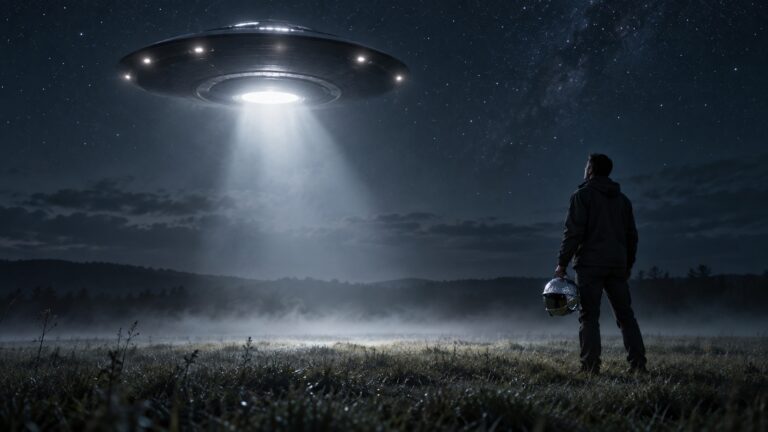
Leslie Kean isn’t just any journalist; she’s a trailblazer in the world of UFO research. Her shift from mainstream reporting to investigating unidentified aerial phenomena raises important questions. What drives her commitment to uncovering these mysteries? With her focus on credible evidence and testimonies from high-ranking officials, Kean challenges long-held beliefs about UFOs. But is there more to her story than meets the eye? Explore her journey and its implications for our understanding of the unknown.
The Journey of Leslie Kean: From Journalism to UFO Research
As you dive into the world of Leslie Kean, you’ll discover how her journey from traditional journalism to UFO research has reshaped the conversation around unidentified aerial phenomena.
Kean, initially grounded in investigative reporting, approached the UFO topic with a skepticism that many journalists lack. She recognized that exploring these phenomena isn’t about blind belief but about seeking the truth hidden in the shadows.
By meticulously documenting credible sightings and engaging with experts, she challenges the stigma surrounding UFOs. Her work encourages you to question the narratives you’ve been fed, pushing for a broader dialogue.
In a realm often dismissed, Kean’s investigative rigor invites you to contemplate the unexplained, advocating for transparency in a subject that’s both fascinating and controversial.
Key Publications and Contributions
Leslie Kean’s commitment to uncovering the truth is evident in her key publications and contributions, which have significantly advanced the discourse surrounding UFOs.
Her groundbreaking book, “UFOs: Generals, Pilots, and Government Officials Go on the Record,” compiles credible testimonies from military and government personnel, challenging the stigma often associated with UFOs.
Kean’s work has sparked critical conversations, urging readers to question the status quo. Additionally, her articles in prominent media outlets have brought serious attention to the topic, blending investigative rigor with compelling narratives.
The Importance of Credibility in UFO Investigations
When investigating UFOs, credibility serves as the cornerstone for any serious inquiry into the phenomenon. You need to sift through claims and evidence, discerning fact from fiction.
A credible investigation relies on reliable witnesses, verifiable data, and scientifically sound methods. Without this foundation, it’s easy for sensationalism to overshadow genuine discoveries. You should be skeptical of extraordinary claims that lack substantial backing; after all, anyone can fabricate a story.
By prioritizing credibility, you not only strengthen your own understanding but also contribute to a more informed public discourse. In the quest for truth, you empower yourself and others to explore the unknown with an open yet discerning mind.
Breaking Down the Stigma Surrounding UFOs
The stigma surrounding UFOs often discourages open discussion and critical investigation, creating an environment where genuine inquiries can be overshadowed by ridicule.
You might find it frustrating when people dismiss UFO claims without a second thought, but this mentality stifles progress. By questioning the narrative and seeking evidence, you can challenge the preconceived notions that fuel skepticism.
Engaging in honest conversations about UFO sightings can foster a culture of curiosity rather than derision. Consider that many credible witnesses and experts, like Leslie Kean, advocate for rational discourse.
As you explore this phenomenon, remember that breaking down stigma not only expands your understanding but also allows for a more nuanced view of what’s possible beyond our earthly confines.
Advocacy for Government Transparency
While many believe that UFO phenomena are best left unexplored, advocating for government transparency is essential for uncovering the truth behind these mysterious sightings.
You deserve to know what your government knows. By demanding open access to classified documents and reports, you can challenge the narrative that surrounds UFOs. This isn’t just about curiosity; it’s about accountability.
When officials withhold information, it breeds distrust and speculation. Leslie Kean’s work highlights the need for an honest dialogue about UFOs, urging citizens to question governmental secrecy.
By pushing for transparency, you empower yourself and others to explore the possibilities beyond our understanding. Embracing this advocacy can lead to a greater awareness of the unknown and foster a culture of inquiry.
Don’t let fear stifle the quest for truth.
The Future of UFO Research and Public Perception
As advocacy for government transparency gains momentum, the landscape of UFO research is evolving alongside public perception. You’re witnessing a shift where curiosity replaces ridicule, allowing open discussions about unidentified phenomena.
This change could lead to more rigorous investigations and, ultimately, truth. However, skepticism remains vital; not every sighting deserves immediate credence. You should stay aware of sensationalism that can skew facts.
As more credible voices like Leslie Kean’s emerge, you’ll find a growing demand for accountability from authorities. This evolving dialogue could pave the way for a more informed public, encouraging independent research and a broader understanding of the unknown.
Embrace this opportunity to seek knowledge while questioning narratives, ensuring freedom of thought prevails in the UFO discourse.
About the Author