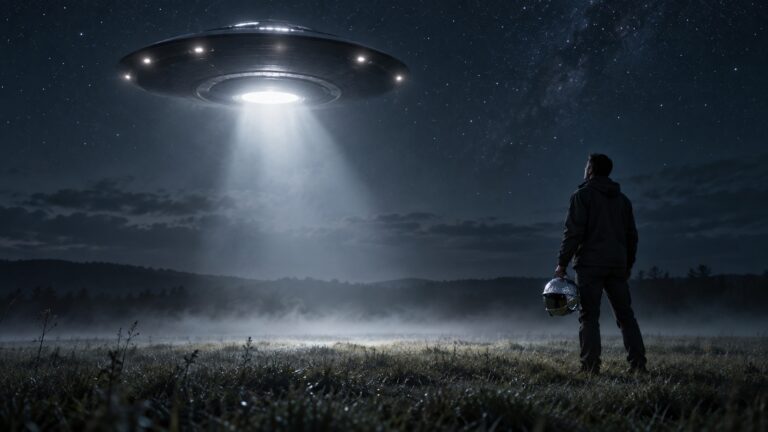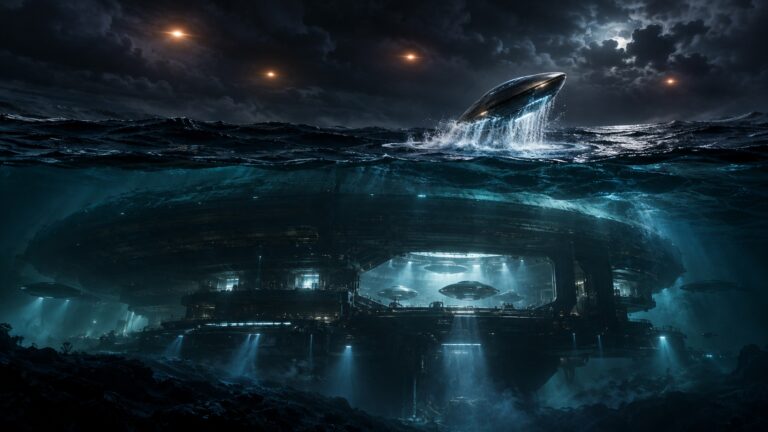
Morris K. Jessup, a pivotal figure in the early days of UFOlogy, sparked intrigue with his theories on extraterrestrial life and government secrets. His exploration of the Philadelphia Experiment raised questions about the nature of reality and military experimentation. What if advanced civilizations really are observing us? As you consider these possibilities, the intertwining of Jessup’s life and the enigmatic claims surrounding the USS Eldridge might reveal more than you expect.
Early Life and Education
Although Morris K. Jessup is often remembered for his intriguing theories about the Philadelphia Experiment, his early life laid the groundwork for his unconventional thinking.
Born in 1900, he grew up in a family that valued education, fostering his curiosity about science and the unknown. You might find it fascinating that he earned degrees in physics and mathematics from the University of Miami.
His academic background, combined with a passion for astronomy, fueled his imaginative explorations. As you delve into his early experiences, consider how they shaped his views on the nature of reality.
Jessup’s inquisitive spirit hints at a broader quest for truth, suggesting he sought answers beyond conventional boundaries, paving the way for his later contributions to the UFO discourse.
The Birth of UFOlogy
As the mid-20th century unfolded, a blend of scientific curiosity and cultural fascination ignited the birth of UFOlogy, captivating the imaginations of many.
You couldn’t help but feel the excitement as reports of unidentified flying objects began flooding newspapers. These sightings, often dismissed as mere fantasies, resonated with the public’s yearning for something beyond the ordinary.
Pioneers like Morris K. Jessup emerged, questioning reality and challenging conventional wisdom. People started to explore the possibility of extraterrestrial life and government cover-ups.
This burgeoning field encouraged you to ponder not just what was in the skies, but what that meant for humanity’s place in the universe. UFOlogy became a space for inquiry, a quest for truth, and an expression of freedom to think beyond limits.
The Case for the UFO
While skeptics often dismiss UFO sightings as mere illusions or misinterpretations, a substantial number of credible reports suggest there’s more to the phenomenon than meets the eye.
You might consider the testimonies of military personnel, pilots, and scientists who’ve encountered unexplained aerial phenomena. These witnesses often describe advanced technology, maneuverability, and speeds that defy our understanding of physics.
Additionally, government documents and declassified reports indicate a long-standing interest in these sightings, hinting at a reality that challenges conventional beliefs.
As you explore this topic, keep an open mind; the truth may be hiding in plain sight. The quest for understanding UFOs invites you to question the limits of our knowledge and embrace the mysteries of the universe.
The Philadelphia Experiment: Origins and Claims
The origins of the Philadelphia Experiment are steeped in mystery and intrigue, captivating the imaginations of conspiracy theorists and skeptics alike. Allegedly conducted in 1943, the U.S. Navy aimed to make the USS Eldridge invisible to radar, but claims suggest it went far beyond that.
Some say the ship disappeared completely, reappearing in another port, while others recount bizarre side effects on crew members. These stories, fueled by the enigmatic tale of the experiment’s supposed technology, raise questions about military secrecy and the pursuit of advanced science.
You might wonder if such an extraordinary event could have occurred, or if it’s merely an elaborate hoax. Either way, the legend of the Philadelphia Experiment continues to spark curiosity and debate among those seeking the truth.
Jessup’s Theories on Extraterrestrial Life
Though often overshadowed by his involvement in the Philadelphia Experiment, Morris K. Jessup’s theories on extraterrestrial life capture your imagination.
He believed that advanced civilizations might already be observing Earth, influencing human development. Jessup speculated that these extraterrestrials could possess technology far beyond our understanding, perhaps even enabling interdimensional travel.
He proposed that UFOs weren’t just mere sightings but potential visitors from other worlds or dimensions, challenging our perception of reality.
By exploring ancient texts and connections between humanity and the cosmos, Jessup hoped to unveil a greater truth about our existence.
His ideas invite you to ponder your place in the universe and whether you, too, could be part of a larger, interconnected tapestry of life beyond Earth.
Government Secrecy and Cover-Ups
As you delve into the mysteries surrounding the Philadelphia Experiment, you’ll quickly realize that government secrecy and cover-ups play a pivotal role in shaping public perception.
The U.S. government’s reluctance to disclose information fuels speculation about advanced technology and potential extraterrestrial involvement. You might wonder why officials remain tight-lipped; perhaps they’re guarding secrets that could disrupt the status quo.
Rumors of classified projects and disinformation campaigns circulate, suggesting an ongoing effort to control narratives. This secrecy not only stirs intrigue but also questions the very nature of truth in a democratic society.
As you explore these layers of deception, consider how much you value transparency and the right to know, especially when it comes to matters that could fundamentally alter our understanding of reality.
The Legacy of Morris K. Jessup
While many might view Morris K. Jessup as just another eccentric, his legacy is far more profound.
You’ll find his work ignited curiosity about UFOs and government secrets, inspiring countless enthusiasts to explore the unknown. Jessup’s theories challenged conventional thinking, urging you to question the boundaries of science and the military’s role in hiding information.
His unique approach to the Philadelphia Experiment continues to captivate those seeking truth beyond the mainstream narrative. By blending science, philosophy, and speculative thought, Jessup paved the way for future researchers and thinkers.
His writings invite you to embrace curiosity and challenge authority, reminding you that the pursuit of knowledge is a powerful tool for freedom. Jessup’s influence lingers, urging you to delve deeper into the mysteries that surround us.
Ongoing Interest in the Philadelphia Experiment
Morris K. Jessup ignited a flame of curiosity that still burns brightly around the Philadelphia Experiment. You might find yourself drawn into the myriad theories surrounding this controversial event, where the USS Eldridge allegedly became invisible.
As whispers of government cover-ups circulate, you can’t help but ponder the implications. Is there a reality behind the myth? Researchers and enthusiasts alike continue to explore the stories of time travel and dimensional shifts, often fueled by declassified documents and eyewitness accounts.
With each new piece of evidence, the allure deepens. You may wonder what truly happened that fateful day in 1943, and whether it holds answers about freedom, technology, and the unknown realms of our existence. The mystery beckons you.
About the Author