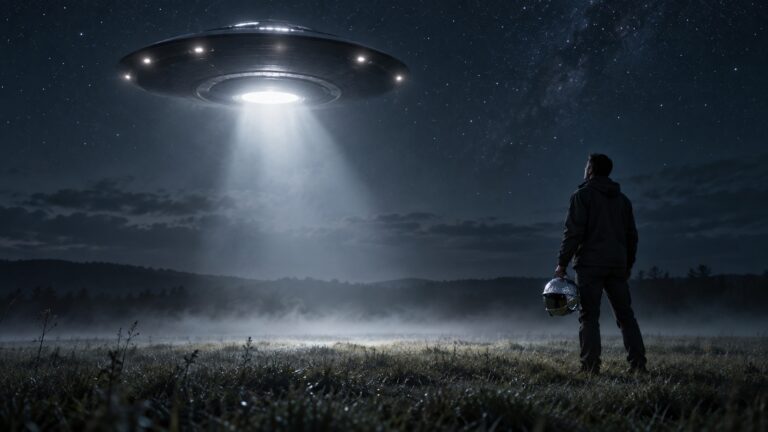
Throughout history, stories of alien abductions have fascinated humanity, inspiring countless books, movies, and theories. While many explanations lean into the mysterious and unexplained, some researchers are exploring a more scientific perspective—one that considers the role of genetics. Could our very DNA hold clues to why certain individuals repeatedly find themselves in the presence of extraterrestrial visitors? As we delve into this cosmic mystery, a new frontier emerges: the possibility that our genes might be the key to understanding these extraordinary encounters.
Unlocking the Cosmic Code: How Genetics Might Explain Repeated Abductions
Imagine your DNA as a kind of cosmic blueprint, containing not only the instructions for your physical makeup but also potential secrets about your experiences and perceptions. Some scientists propose that genetic variations could influence how individuals perceive or remember alien encounters, making certain people more prone to repeated abductions. These genetic factors might affect brain chemistry, sensory sensitivity, or even the way memories are encoded and retrieved, creating a predisposition for these phenomena to occur repeatedly in specific individuals.
The idea that genetics play a role in abduction experiences challenges the purely mystical or psychological explanations often associated with them. Researchers are investigating whether mutations or specific gene expressions might make some people more receptive to, or more likely to report, alien contact. For example, variations in genes related to neurotransmitters like serotonin or dopamine could influence perception, hallucination susceptibility, or the formation of vivid memories—potentially explaining why some individuals experience these encounters repeatedly.
Moreover, certain hereditary traits or inherited sensitivities might make a person more attuned to subtle energies or extraterrestrial signals. It’s as if the cosmic code includes a “frequency” that some individuals are born with, tuning them into a frequency where alien interactions are more noticeable or memorable. While still a developing field, this genetic perspective offers an exciting and hopeful avenue for understanding the mysteries of repeated abductions without dismissing personal experiences but instead exploring their biological underpinnings.
Celestial DNA: The Surprising Link Between Genes and Alien Encounters
Recent studies have begun to explore the fascinating possibility that specific genetic markers could be linked to experiences of alien contact. Some researchers suggest that individuals who report multiple abductions might share common genetic traits—such as variations in genes responsible for brain plasticity or sensory processing. If proven, this could mean that a unique celestial DNA profile influences not only whether someone perceives alien encounters but also how vividly they remember these events over time.
Interestingly, scientists are also looking into the role of epigenetics—the study of how environmental factors can switch genes on or off—in shaping these experiences. Could past trauma, cultural beliefs, or exposure to certain environments influence gene expression in a way that heightens the likelihood of abduction reports? This idea bridges the biological with the experiential, suggesting that our genetic makeup and life experiences together craft our perception of the universe’s mysteries. By understanding these links, we might better grasp why some individuals are repeatedly drawn into these cosmic stories.
Furthermore, the concept of a “cosmic genetic fingerprint” is emerging—an intriguing notion that some people might carry a unique genetic signature that connects them to ancient extraterrestrial lineages or cosmic origins. This idea tantalizes the imagination: perhaps our genes are not only the result of earthly evolution but also contain whispers of interstellar history. As science advances, unraveling these celestial DNA mysteries could transform our understanding of human uniqueness and our place in the universe, transforming abductions from mere stories into a profound biological phenomenon.
The intersection of genetics and alien abduction stories opens a new chapter in understanding these mysterious encounters. While we are still in the early days of uncovering how our genes might influence perceptions, memories, and sensitivities to extraterrestrial phenomena, the potential is genuinely exciting. Could our very DNA be the cosmic code that unlocks the secrets of these repeated visitations? As science continues to explore this possibility with curiosity and cheerfulness, one thing remains clear: the universe might be more intertwined with our biology than we ever imagined. In the grand tapestry of existence, perhaps our genes carry the stardust of ancient cosmic journeys, waiting to be understood.
About the Author